Speaking & Consulting

Resources
 Buy the Book

Why generic advice fails, and what real strategy looks like.
Be more assertive. Speak up. Build executive presence. Find a sponsor. Negotiate harder. Take up space.
Every woman I have worked with can recite that list. She got it from mentors and conference panels, from the leadership shelf at the airport bookstore, and from bosses who delivered it at the end of a performance review, right after telling her she had exceeded every target.
The list wasnever written to move her forward. It has never once told her how to play theboard in front of her: a specific room on a Tuesday morning, with specificpeople who already have opinions about her. Instead, it teaches her to think, somethingis wrong with me. It is not a her problem.
Generic advice describes behavior in the abstract. Strategy is behavior chosen for a specific setting and particular people in pursuit of a defined result. The list strips out all of that context, which means it strips out everything that determines whether the advice will work.
"Speak up" means one thing in a room where the decision-maker already trusts your judgment and something entirely different in a room where he decided months ago that you are too much. "Negotiate harder" assumes the person across the table will read your push the way he would read it from a male colleague, and anyone who has tried it knows that assumption does not hold. "Find a sponsor" assumes you know who carries weight when the decision is made, and in most organizations that is not the person with the biggest title.
When the advice fails, nobody concludes the advice was wrong. The conclusion is that she executed it badly, so she gets more of it. I have watched brilliant women spend years in that loop. They became more assertive and were told they were abrasive. They softened their delivery and were told they lacked authority. They spoke up more and were told to read the room. Each correction arrived as though the previous one had never been given, and none of it added up, because none of it was connected to anything she was actually trying to accomplish.
Confidence wasnever the missing piece. Strategy was.
The people who move easily through organizations are not working from better instincts. They were shown the chessboard. They are working from a playbook they absorbed over years, in the hallway after the meeting, on the golf course, and in the private conversations where a senior leader who saw himself in them explained how decisions really get made. They learned who needs to be briefed before a vote, which objections will surface and from whom, and when a decision needs a push and when it needs time to settle. That knowledge is strategic. Hoarding it is a power play, and almost none of it is written down. It travels through relationships, and most women were never invited into those relationships. They were left to learn the board by trial and error while being judged on every move.
Handing women that playbook would not solve the problem, because it was built on someone else's style, someone else's relationships, and a latitude that organizations do not extend to everyone equally. What works is a strategy built on her own board, grounded in who she is and in the specific system she is standing in. That is why I built the Leadership Blueprint™ Framework.
The framework comes out of thirty years of pattern recognition inside male-dominated organizations. In most of those rooms I was the only woman at the table or one of very few. I did not arrive at this by studying leadership from the outside. I work in systems, and I came to this framework through experience, both my own and the work I have done with women inside and outside organizations, figuring out what actually moved their careers and what the standard advice left them to solve on their own.
Two convictions sit underneath all of it. The first is that leadership is strategic, not instinctive. Effective leaders choose their approach based on the context and the outcome, not on habit or personality. The second is that influence is built through strategic behavior. You assess the board, the players, the power, and the outcome you want, and you determine the move most likely to produce that outcome. That is a decision you make from a position of authority over your own career. It has nothing to do with changing who you are, and it has nothing to do with the demand for compliance that women have been fielding for their entire careers. Women do not have to become different leaders. What changes is the strategy, built for the chessboard they are actually playing on.
Every woman in leadership is playing on her own board. No one else has her organization, her players, her position, or her objective, which is exactly why a generic list cannot tell her what move to make next. Mastering that board starts with knowing your own pieces: how you lead, where your strengths create value, andwhat happens to your leadership when the pressure climbs.
It requires reading the players. Many of the moments that get labeled as leadership failures are strategic misreads of the people involved. A detailed analysis put in front of someone who decides on the recommendation alone can kill a good idea before anyone has evaluated it. That is what Reading the Room is for. It also requires seeing where power actually sits, which is often somewhere other than where the organizational chart puts it. That is the work of Power Mapping, and it is the difference between making moves on the board you were shown and making them on the board that actually exists. Before I ever ran an organization, I was a field scientist, and the first discipline of fieldwork isto study the system you are actually standing in rather than the one describedin someone else's manual.
And it requires a clear objective. Most leadership advice aims at some version of being taken more seriously, which is a feeling and not a goal. A strategy aims at something you will recognize when you achieve it: a specific role, authority over a decision, a seat in a room you are currently kept out of.
The Leadership Blueprint™ Framework brings those elements together. It is not a personality profile and it is not a development plan. It is how you decide your moves before you walk into the room instead of reconstructing them on the drive home. It is not a borrowed playbook. It is a strategy built for your board, and it does not ask you to become someone else.
None of this means the problem was ever the women. It was not. Organizations that reward a single leadership style, interpret the same behavior differently depending on who displays it, and route opportunity through networks that exclude most women are the ones that need redesign, and that responsibility belongs to the people who hold the power to do it. My book, Change the System, Not the Women, makes that case in full.
The book addresses the system. The Leadership Blueprint™ Framework addresses the board you are on right now, where the pieces keep moving while the system changes. The system will not be redesigned on your timeline. You are leading now on the board as it stands. A strategy built on the system as it exists today turns the leader you already are into a deliberate player on that board. Working strategically inside a broken system is not the same as accepting it. It is how women reach the positions from which they can change it.
This is the strategic advisory work I do with senior women leaders. It is individualized strategy built around one leader, her board, and the outcomes she is after.
The list will keep coming. Be more assertive. Speak up. Build executive presence. Find a sponsor. Negotiate harder. Take up space. It is generic advice, it is controlling, and it has no intended outcome other than making you smaller. Not one item on that list is a strategy. Not one of them will move you one square closer to the outcome you are after. Strategy will. Build yours, and master your chessboard.
Join 12,000+ readers receiving weekly insights on leadership, confidence, communication, and personal growth.


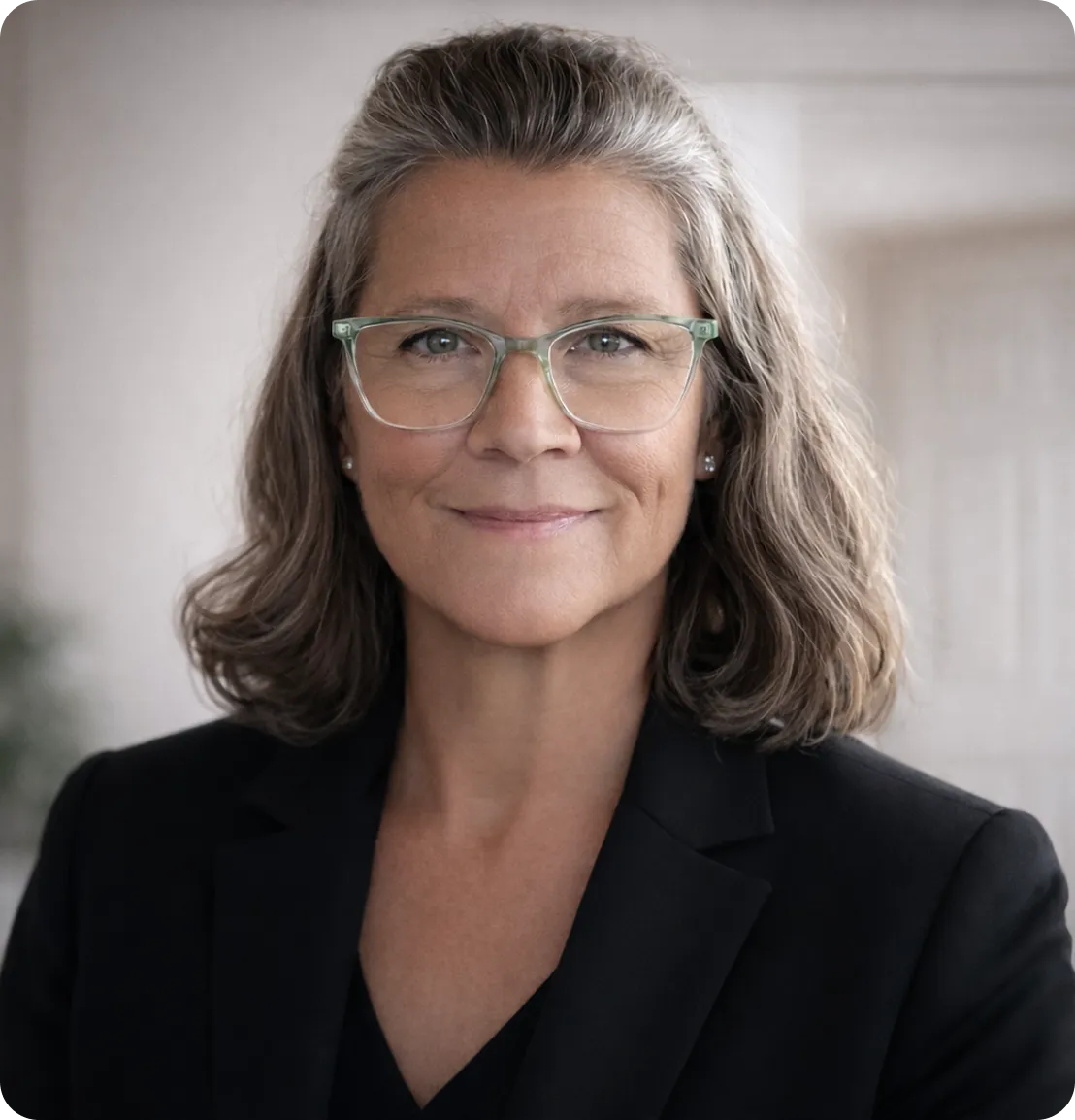
Dr. Tina Yerkes is a leadership consultant, keynote speaker, and author with 25+ years leading mission-driven organizations. A PhD scientist with executive training from Harvard and Kellogg, she has scaled nonprofits, secured seven-figure funding, and advised leaders across environmental conservation, public health, and social impact. Her work focuses on what it takes for women and mission-driven leaders to thrive — and on building the systems that hold them up.
Read Full StoryDrop your email and we'll send Chapter 1 plus the reading guide.
© 2026 TinaYerkes. All Rights Reserved.